Plane Crashes Upside Down in Pacoima Parking Lot, Pilot Hospitalized
A small plane crashed inverted in a Pacoima auto parts store parking lot Sunday, downing power lines. The pilot survived and was hospitalized.
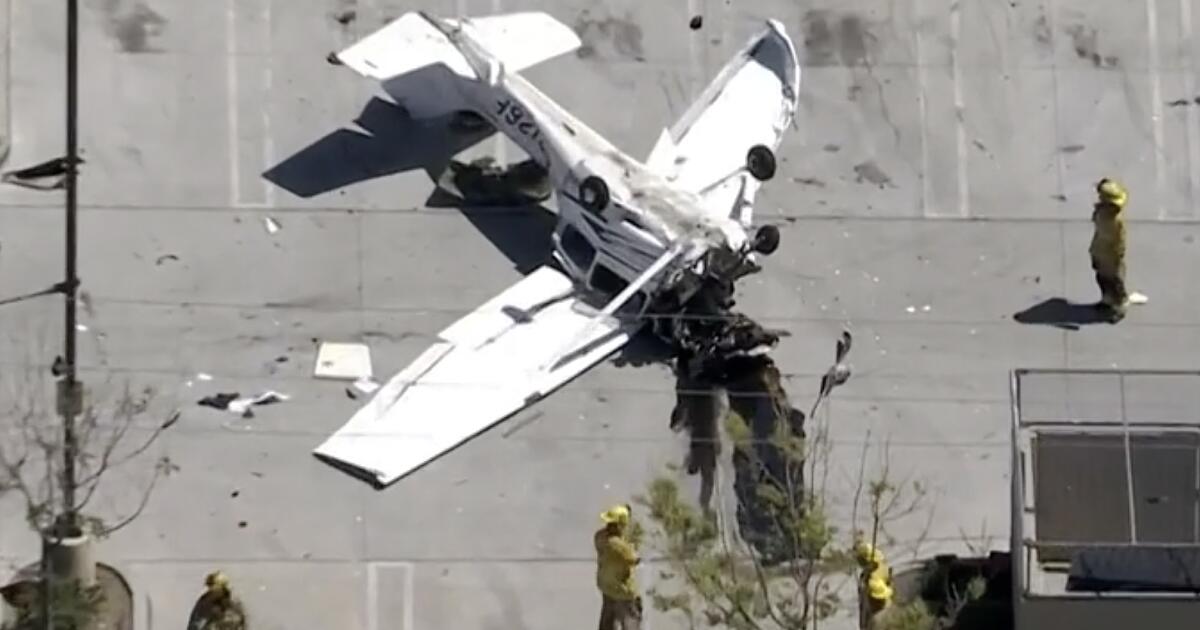
A small plane crashed upside down in a Pacoima auto parts store parking lot Sunday, knocking out power lines and sending the pilot to the hospital, according to the Los Angeles Fire Department.
The crash happened in the northeastern San Fernando Valley neighborhood, a densely populated area where a downed aircraft in a commercial lot could easily have killed bystanders. It didn’t. The pilot survived.
Firefighters from the Los Angeles Fire Department arrived to find the plane inverted in the parking lot, with power lines down in the immediate area. The downed lines complicated access for crews and forced utility workers to respond alongside emergency responders. No other injuries were reported at the scene.
Details on what caused the crash weren’t immediately available. The Federal Aviation Administration and the National Transportation Safety Board typically take jurisdiction over aircraft accident investigations, and both agencies were expected to open inquiries. Neither had released a preliminary cause as of Sunday.
The Pacoima crash is the kind of incident that draws attention far beyond the local neighborhood, partly because small general aviation aircraft operate over populated Southern California communities every day, and partly because crashes like this one rarely produce zero fatalities. The pilot’s survival, given the plane came to rest inverted, is notable.
Pacoima sits in the northern end of the San Fernando Valley, roughly five miles from the Whiteman Airport, a general aviation facility that’s been operating in the area for decades. Whether the aircraft originated from Whiteman or another nearby field wasn’t confirmed in early reports. As LA Times coverage of the incident noted, the Los Angeles Fire Department confirmed crews responded to the crash and found power lines down at the scene.
General aviation safety advocates have pushed for stronger oversight of small aircraft operations near populated corridors in Los Angeles County. The FAA’s accident database tracks incidents like Sunday’s crash as part of a broader effort to identify patterns in low-altitude flight failures over urban areas.
Community response in Pacoima was swift. Residents posted video and photos to social media within minutes of the crash, showing the plane’s tail sticking up from the lot and emergency vehicles surrounding the scene. The auto parts store, which wasn’t identified by name in initial reports, appeared to be closed at the time. That likely kept the casualty count at one.
Small plane crashes near urban commercial areas aren’t common, but they aren’t unheard of in Southern California either. The region’s mix of busy general aviation airports, dense housing, and sprawling commercial corridors creates conditions where a mechanical failure or navigation error at low altitude can bring an aircraft down fast, with little room to maneuver.
Sunday. Inverted. Parking lot.
Those three facts, sitting together, tell you how bad this could have been.
Investigators will want to know the aircraft’s registration, its departure point, its intended destination, and what the pilot reported experiencing before losing control. Black box data isn’t typically available on small general aviation aircraft, which makes witness accounts and physical evidence from the wreckage more important in reconstructing what went wrong.
The National Transportation Safety Board publishes preliminary reports on aviation accidents typically within a few days of the incident, with full investigative reports following anywhere from several months to two years later, depending on complexity. The Pacoima crash will likely generate a preliminary report quickly given the urban location and the media attention it drew.
For now, the pilot remains hospitalized. Condition wasn’t specified in early reports, though the fact that the person survived a rollover crash of this kind suggests the aircraft’s cabin structure held together reasonably well on impact. Structural integrity on impact is one of the things investigators look at when trying to understand why one crash kills everyone aboard and another lets the pilot walk away.
Or, in this case, get taken away in an ambulance rather than a body bag.
The Los Angeles Fire Department didn’t release a statement with further detail by Sunday evening, and no other agencies had provided updated information on the pilot’s condition or the investigation’s early direction. Further updates are expected as the FAA and NTSB begin their standard review process and as the scene is cleared and examined.
Get The Standard Weekly
Top stories from California Bud in your inbox. Free.